


Extending the Smartphone functions to your wrist, Smartwatch is a popular tech-gadget nowadays. Progressively, its popularity has been increasing. Smart-watches represent a lucrative multi-million dollar business with enormous potential in the upcoming years. This highly competitive market offers thousands of distinct best smartwatches models manufactured by tech-companies and watch brands.
Each of them offers diverse functionalities and aesthetic styles. Majority of smart-watch models typically have unisex aesthetic, which does not satisfy the customers who love to wear masculine timepieces. To assist such clientele, we have prepared an exclusive list of ten best smart watches that are masculine in nature and specially created for men. The list starts with the most expensive smartwatch and concluded with the affordable one.
1. HUBLOT Big Bang e

HUBLOT Big Bang e is a high-luxury smartwatch that blends bold designs, cutting-edge materials and the latest wearable technology. Hublot has selected its popular HUBLOT Big Bang line as the launch pad to create this technological marvel. In its technical side, the timepiece incorporates the Qualcomm® snapdragon wear™ 3100 platform powered by Wear OS by Google™, which offers multitude of functions useful for daily life. The smart-watch supports both Android (6.0+ and above) and iOS (12.0+ and above). It is also compatible with wireless connectivity technologies like NFC, Bluetooth 4.2 with BLE and WLAN 2.4 GHz 802.11.
It features a scratch-proof sapphire crystal with AMOLED HD touch-screen with a resolution of 390×390 pixels. And if you are a keen admirer of classic watch complications, Big Bang e offers analogue displays on its digital screen, with choices like Time-only, Chronograph, GMT/Second Timezone and Perpetual Calendar with Moonphase. This smart-watch features a rotating crown with an integrated pusher for activating the specific functions while the touch-screen typically allows the user to view and operate Smart-functions.
This smart-watch watch follows all design codes of the Hublot Big Bang series for ensuring built-quality, bold-design and masculine appeal. Made from Titanium or Black Ceramic, its 42mm diameter case paired with solid rubber strap maintains a bold and masculine nature. The hour-markers placed under the sapphire crystal reminds us the bezels of Hublot watches. It also maintains an impressive water resistance of 30 meters. The watch also features a patented One Click system that allows the user to instantly switch-over the straps. Priced above S$ 6500, HUBLOT Big Bang e is one of the expensive smart-watches specially created for men.
2. Tag Heuer Connected Watch, Third Generation
Tag Heuer introduced its first smartwatch in 2015 in partnership with Intel Corporation and Google. In June 2020, the Swiss avant-garde luxury watch brand unveiled the third-generation of its Connected Watch. This new version is equipped with the Qualcomm® snapdragon wear™ 3100 Smartphone technology and the powerful Wear OS by Google operating system. It supports wireless connectivity technologies like Bluetooth 4.1, NFC and WiFi.
This modern smartwatch features a masculine 45mm diameter case inspired by the distinct designs of the luxury brand’s chronograph watches. The third-generation connected watch features some distinct aspects of Tag Heuer chronographs: facetted lugs, case with polished and brushed finishing, graduated ceramic bezel, central rotating crown, pushers and screwed case-back. Seamlessly incorporating the updated wearable technology with an iconic watch design, this Swiss made smartwatch is available with stainless steel and titanium versions.
The third-generation Tag Heuer Connected Watch features a 454×454 pixels OLED touch-screen protected with a scratch-proof sapphire crystal glass. Its smartwatch functions can be operated with touch-screen, crown and pushers. With the top pusher, the user can launch Sports app while the lower pusher is used for the stopwatch function.
The smartwatch also features in built sensors like heart rate, compass, accelerometer, microphone and gyroscope. In addition to the numerous functions offered by Google’s Smartwatch operating system, this new version incorporates custom-built apps like Watchface app, Sports watch app, stopwatch, timer, alarm and Companion App. Its sports-oriented smartwatch apps are useful for athletes and adventurers. It also features a built-in GPS system for navigation and tracking. The user can also edit and customise watch faces using a custom built app.
Made with highly reliable materials, this masculine model incorporates all the distinctive characteristics of a reliable sports watch. Moreover, it has a water resistance up to 50 meters. This sports-oriented luxury smartwatch can be paired with a solid stainless steel bracelet or rubber strap featuring push-button folding clasp. The quick-change system for straps enhances its versatility. Tag Heuer Connected Watch has a price range starting at S$ 2000.
3. Garmin MARQ
Garmin has been renowned worldwide for their GPS based navigational systems, portable communicators and all-weather wearable technology devices. Recently, the company has expanded the impressive MARQ collection of smart-tool watches by adding new Performance Editions.
Paired with most recent wearable technologies, Garmin MARQ is masculine smartwatch collection specially created for athletes, explorers, aviators and drivers. The extensive collection offers models like Athlete, Adventurer, Aviator and Driver; each of them has its own custom features. The MARQ smartwatch models are currently available in Performance Editions also.
For example the aviator model offers custom functions like Direct-to-navigation key, Moving map, HSI course needle, Weather reports, Flight plans and Flight logging. The driver version offers Lap time repeatability, Virtual pit wall, Last race summary and Track timer. Like this, Athlete and Adventurer models feature customized apps and functions, useful for sportspersons and adventurers respectively.
Powered by Garmin Connect™ App, these watches are compatible with Android (6.0 and above) and iOS (12 or higher). Display resolution is 240 x 240 pixels. Type of the display is sunlight-visible, transflective memory-in-pixel (MIP). The Garmin MARQ watch offers a battery-life of up to 12 days in Smartwatch mode.
MARQ features most smart-device functions like notifications, music apps, Garmin payment app and many other applications. This smart-device also supports MULTI-GNSS system for tracking the positions for navigational purposes. In addition to GPS, it can utilise the services provided by the other global navigation satellite systems like GLONASS and Galileo. Its user can also send and receive messages remotely when paired with Garmin’s inReach satellite communicators. The watch also offers fitness and wellness tracking apps for monitoring heart-rate, stress-score, body oxygen levels, respiration performance and hydration level.
Moreover, all MARQ watches incorporate most reliable materials, like titanium, ceramic, DLC, sapphire crystal and silicone rubber. The case measures 46mm diameter and the thickness can vary depends upon the model. The MARQ watches feature titanium or DLC-coated titanium case.
Made with titanium with or without DLC, its bezel feature ceramic insert with tachymeter scale or 24-H GMT marking depends upon the model. Fitted with a domed sapphire crystal glass, all models are water resistant up to 100 meters. These watches are fitted with high-performance silicone rubber straps. Price range of highly professional smart-tool watch starts at S$ 2000.
4. Montblanc Summit 2+ Smartwatch
Summit 2+ is the most recent edition of Montblanc’s smartwatch collection. Montblanc Summit 2+ is the first luxury smartwatch that can directly activate cellular connectivity right in the Wear OS by Google app on Android smartphones. This gadget is most suitable for the business lifestyle.
The watch features an AMOLED display protected with the sapphire crystal glass. Its built-in Watchface configurator offers more than thousand dial themes by customizing indicators, background, hands and complications. The watch faces remain visible at all times with the always-on colour ambient mode. Powered with Wear OS H-MR1 by Google, the watch supports Bluetooth, WIFI, GPS, NFC, LTE and 3G.
It also incorporates Sensors like Heart Rate, Barometer, Compass, Accelerometer, Gyro and Ambient Light Sensor. Other useful functions are GPS, Google Assistant, Timeshifter® app, Montblanc Travel Info app, Google Pay, fitness apps like VO2max (smart virtual fitness assistant) and health monitoring. With a built-in speaker, Summit 2+ allows the owner to access services like phone calls or the Google Assistant.
Summit 2+ takes its design inspiration from the Montblanc 1858 collection. Montblanc Summit 2+ Smartwatch features a 43.5mm steel case, with additional options of black DLC, stainless steel and rose gold or bronze coloured steel finish. The watch also features a rotating crown and two programmable pushers. Price range is above S$ 1300.
5. Alpina Seastrong Horological Smartwatch
This new-generation smartwatch incorporates the designs of the traditional Swiss watch brand’s diving line, Seastrong. Endowed with ‘Smart’ functions, this rugged sports watch was created in collaboration with Swiss tech-company MMT.
Its smart functions prominently include Notifications of mail and calls, Activity Tracking, Sleep Monitoring, Automatic Time & Date update irrespective of time zones, Sleep Cycle Alarm, Get-Active Alerts, Dynamic Coaching, Cloud back-up and restore and Worldtimer 24 time zones. Compatible with both iOS and Android systems, the MMT-365 app establishes the connectivity with Smartphone using Bluetooth.
The Seastrong Horological Smartwatch takes its design inspiration from the historical Alpina diving watches. Made with fiber glass and stainless steel, its 44m diameter is topped with a uni-directional rotating bezel.
Fitted with a sapphire crystal glass, the watch offers a water resistance of 100 meters. The dial features applied white luminous indexes and hands. This water-sports inspired Smartwatch is available with different bezel colors like black, green, orange and navy blue. Fitted with an all-purpose rubber strap, this smartwatch will be a great companion during your adventures, out-door sports and recreational water-sports activities. Price range is above S$ 950.
6. Samsung Galaxy Watch3 Titanium Mystic Black
The Samsung Galaxy Watch3 Titanium is a masculine smartwatch that seamlessly combines luxury with excellent durability. Spotlighting a distinct design, it features a 45mm diameter case topped with a characteristic rotating bezel.
Powered with the Tizen Based Wearable OS 5.5 operating system, the watch is compatible with Android (5.0 and above) and iOS (9.0 and above). It also supports LTE, Bluetooth, Wi-Fi and NFC. It is compatible with multiple satellite positioning systems like GPS, GLONASS, Beidou and Galileo. The watch features functions like Accelerometer, Barometer, Gyro Sensor, Light Sensor, Optical Heart Rate Sensor and Electrical Heart Sensor. The watch can be used for measuring blood pressure and ECG monitoring with an in-bulit Heath app. Other fitness/wellness capabilities of this watch are: blood oxygen tracking, home training programs and sleep management.
Made with titanium, the timepiece boasts a Mystic Black color theme. It is also fitted with a premium-quality metal strap of the same color. The Super AMOLED 360 x 360 pixels screen is amply protected with a durable Corning Gorilla glass. Water resistant to 50 meters, it is a great out-door smart watch for active men. Price range is above S$ 650.
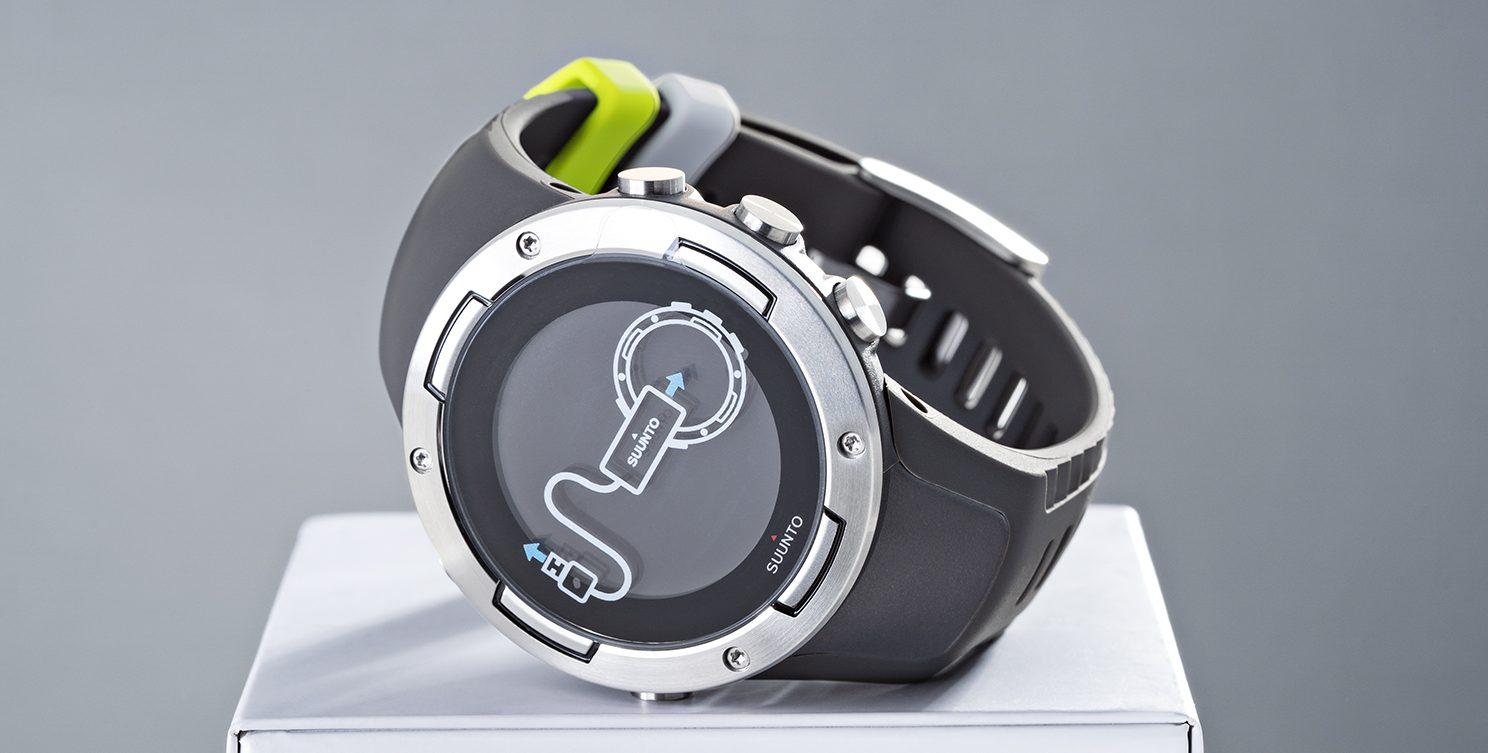
7. SUUNTO 7 Graphite Limited Edition
SUUNTO 7 Graphite is a versatile smart-watch designed and developed in Finland. Specially designed for adventurers and outdoor sports enthusiasts, SUUNTO 7 can track sports-activities accurately. It features 70 sport modes and with Suunto app, the user can connect to sports services like Strava, Endomondo, TrainingPeaks and more. Its route navigation app and GPS are useful for outdoor activities. It also incorporates free offline outdoor-route maps.
Powered with Wear OS by Google, the SUUNTO 7 watch is compatible with Android (6.0 and above) and iOS (10.0 and above). The smartwatch graciously offers plenty of functions typically provided by Wear OS by Google. It also supports Bluetooth, Wi-Fi and NFC. The watch incorporates a multiple satellite-based position tracking feature supported by GPS, GLONASS, QZSS and BEIDOU. Its health monitoring functions also include wrist heart rate.
Measuring 50mm diameter, its case is made with glass fibre reinforced polyimide. Bezel is made with stainless steel. It features an AMOLED screen with 454X454 pixels resolution. Fitted with a durable Gorilla glass, the watch is water resistant to 50 meters. It comes fitted with a 24mm wide, micro-fibre textile strap. A spare silicone strap is also available. The watch has an excellent battery life of 2 days with smart-watch function and up to 40 days with Time Mode. The retail price is just above S$ 530.
8. TicWatch Pro 3 GPS Smart Watch
Developed by the Chinese technology company Mobvoi, the TicWatch Pro 3 GPS is the first Wear OS by Google smartwatch to use the Qualcomm Snapdragon Wear 4100 Platform. This modern platform offers compact design, extended battery life, more indelible performance and advanced health and fitness tracking features. This energy efficient smartwatch incorporates a Dual-layer Display 2.0 system featuring a Retina AMOLED 454 x 454 screen and FSTN display.
The watch face can be customized by using Mobvoi app. It boasts an enhanced battery life of 72 hours in Smartwatch model and up to 45 days in essential mode. This smartwatch supports multiple satellite positioning networks like GPS, Beidou, Glonass, Galileo and QZSS. The TicWatch Pro 3 GPS also incorporates Built-in Mic and Speaker, Heart Rate, Accelerator, Gyroscope, Ambient Light and Barometer. Inspired by the exterior design of a modern chronograph, it features a round case made with steel and plastic.
With a case diameter of 47mm and 12.2mm thickness, the watch has excellent water-proof and dust resistance properties. Perfectly suitable for active lifestyle, this model features a 22mm width solid silicone strap, which is also comfortable to wear. With a padded leather appearance and orange stitching, this interchangeable strap enhances the sporty nature of the smartwatch. The retail price is just above $400.
9. Fossil GEN 5E Smartwatch Carlyle HR Black Silicone
This new Fossil GEN 5E Smartwatch model is compatible with Android (6.0+ excluding Go edition) and iOS (12.0+) Smartphone operating systems. It has an AMOLED 390 x 390 pixels screen with always on display. The display can be customized as desired by the user. This model supports Bluetooth, NFC and WiFi. The watch can be operated by home button, touch-screen and voice. The sensors incorporated with this smartwatch are Accelerometer, Gyroscope, Off-body IR and PPG Heart Rate.
Supported by Wear OS by Google, the GEN 5E Smartwatch boasts hundreds of pre-loaded apps useful for daily life, health, fitness, notifications, activity tracking, music, answer the calls and many more. It can be charged quickly and offers a battery life of more than 24 hours. Dressed in a 44mm diameter black stainless steel case, it offers a water resistance of 30 meters. This Fossil smartwatch comes fitted with a 22mm wide black silicone strap. The retail price is just above S$ 390.
10. Skagen Smartwatch HR – Falster 3 X by KYGO Black Silicone
Boasting a minimalistic design like all Danish products, this smartwatch from Skagen features a 42mm diameter blackened steel case. This budget-friendly smartwatch for men all powered with Wear OS by Google including: heart-rate monitoring, Google Assistant, notifications, activity tracking, Google Pay, GPS and more.
Compatible with Android (6.0+ excluding Go edition) and iOS (10.0+) , the watch also incorporates features and sensors like Accelerometer, Altimeter, Ambient Light, Gyroscope, Heart Rate, Microphone, NFC and Untethered GPS. With full charge, its battery offers autonomy of more than 24-hous. The watch supports Bluetooth® Smart Enabled 4.2 LE connectivities.
Water resistant to 30 meters, the watch also boasts a chronograph like appearance. The Skagen Smartwatch HR – Falster 3 comes with a 22mm wide, interchangeable black silicone strap featuring prong buckle. This special edition was released in collaboration with X by Kygo. The retail price is just above S$ 260.

Leave A Reply
Your email address will not be published.
Thank you for your comments
We have received your comment and it is being processed.Oops, Something Went Wrong
Please try again later.